
Fostex FX120 DIY Bass Reflex Bookshelf Speakers
Gio Militano  
|
Monitor / Bookshelf Speakers
Recently I have had some very good success with a couple of DIY tower loudspeaker projects that used fullrange speaker drivers. Finding myself with the need for a small pair of speakers (studio monitor or bookshelf speaker) I decided to once again use a fullrange driver. I set out to find a good quality driver with a reasonably flat frequency response. The Fostex FX120 fullrange driver looked like a very good choice. The response curve seemed good and the drivers generally seem to receive very positive comments from other DIY hobbyists on the forums. The main problem I faced was that I am not skilled with woodworking, but I wanted a pair of attractive speakers. Short of ordering a custom build, using a prefabricated speaker enclosures seemed like an excellent idea. The curved speaker cabinets with a piano gloss finish from parts express
seemed like a perfect fit.
Bass Reflex Bookshelf Speaker Enclosures
The prefabricated enclosures are constructed out of MDF and have a volume of 0.38 ft3. For additional information about the enclosures, see my previous description of the Parts Express curved speaker cabinets.
Figure 1 shows the calculated frequency response for the FX120 in a 0.38 ft3 bass reflex cabinet tuned to 63 Hz. The frequency response was calculated using WinISD. The -3 dB point is about 58 Hz.
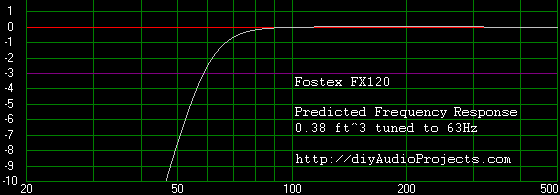
Figure 1: Calculated Frequency Response - Fostex FX120 0.38 ft3 Bass Reflex Cabinets
The enclosure was tuned to about 63 Hz by using a 42 mm diameter port with a length of 65 mm. The photograph below shows the front baffle with the driver and port installed. For maximum performance, it is important to have good airflow from the rear of the driver into the enclosure. The MDF speaker baffle is one inch (25 mm) thick so it is necessary to create a chamfer behind the driver to improve airflow. The chamfer was created using a router.

Photograph 1: 1" Thick Prefabricated Baffle with Fostex FX120 and Port
The speaker cabinets are only lightly damped. I used 1/4" thick upholsterers felt in the front half of the cabinet and a little polyester fill in the back half. A stapler was used to hold the damping material in place. Glue could also be used.

Photograph 2: Speaker Cabinet Dampening
Once all that is complete, add binding posts, wire the speakers and screw the baffle on. Finished photographs of the speaker are shown below. Higher resolution photographs are available in Photo Gallery entry Fostex FX120 Bass Reflex Speaker.
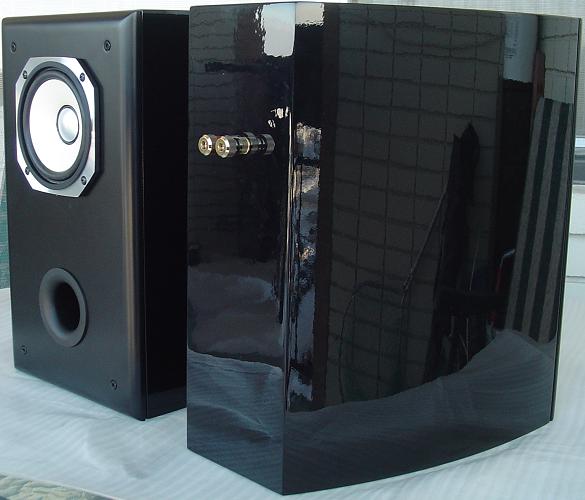
Photograph 3: Fostex FX120 Bass Reflex Speakers - Rear View

Photograph 4: Fostex FX120 Bass Reflex Speakers - Front View
Baffle Step Correction Circuit
Most people will likely find that they prefer the speaker with some level of baffle step correction / compensation (BSC). The amount of attenuation required will be user, room and amplifier dependent. About 3 to 5 dB of attenuation is a good starting point. You can use the component values shown in Figure 2 and tune the BSC to suit your room and amplifier.

Figure 2: Baffle Step Compensation Circuit for 8-inch Wide Baffle
I found that Rbsc=3R9 and Lbsc=1 mH (about 3.5 dB) worked well for my room. For those interested in a Zobel / Impedance Equalization Circuit for the FX120, I have measured the voice coil inductance (Le) of my drivers to be 0.11 and 0.12 mH.
Fostex FX120 Measurements and Listening Impressions
Figure 3 below shows a sweep of the frequency response from about 150 Hz and up. The frequency response measurements were completed using a Radio Shack 33-2050 SPL Meter. The FX120 is a very smooth driver and I prefer it over the similar size (but inexpensive) Fostex FE127E driver. In small sized rooms and as a monitor, the speaker has a very clear mid-range and an extended response. Cymbals are crisp and there is reasonable low end response given the small size of the driver.
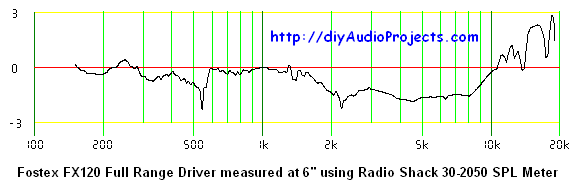
Figure 3: Fostex FX120 Frequency Response Plot at 150 mm
The impedance sweep below was conducted using the Dayton Audio Test System (DATS) with no filters on the driver. The impedance sweep confirms the box tuning of about 63 Hz. A Zobel / Impedance Equalization Circuit can be used to tame the rising impedance response seen which occurs as a result of the voice coil inductance at the higher frequency.
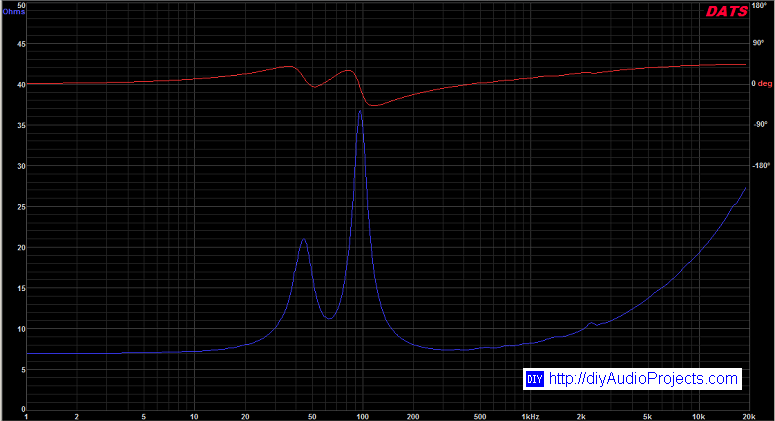
Figure 4: Impedance Sweep - Fostex FX120 Bass Reflex Cabinet

Photograph 5: Fostex FX120 Bookshelf Bass Reflex Speakers on Stands
UPDATE - 21 February 2013
Recently the Fostex FX120 speakers have made their way into the main TV room. In the photo the FX120 bookshelf speakers are paired with an 8-inch sealed subwoofer located in the corner on the right. The bookshelf speakers sit on VTI stands and are connected to a Denon home theater receiver in a 2.1 speaker configuration. Through the reciever settings, I have some control in selecting the speaker-subwoofer crossover point which I have set at 80 Hz. Removing the need for the small Fostex driver to push the bass tones greatly reduces distortion and improves the sonic performance. In some receivers this can be accomplished by setting the speakers to "small".
More Single Driver DIY Speaker Projects
- Fostex FX120 DIY ML-TQWT Speakers
- Fostex FE103En Bass Reflex Bookshelf Speakers (Nearfield Monitors)
- Zigmahornet Speakers with Fostex FE103E / FE103En
- Fostex FE206En Double Bass-Reflex Speakers